6 Key Takeaways from TDX26
A Bold Development Vision Was Announced at Salesforce TDX26

The landscape of software development is evolving at breakneck speed. The TDX 2026 main keynote made one thing clear: we have officially entered the agentic revolution. Time after time, we think we found the keys to the big gates of the agentic era, soon to find out we need to pivot yet once again.

Celebrating the 10th anniversary of the event and the broader Trailblazer movement, Salesforce leadership shared a bold new vision for how businesses build applications and operate their workflows.
The Rise of the Agentic Enterprise with TDX26
Probabilistic AI workflows are fundamentally changing the era of deterministic software, where rigid inputs always yield the exact same outputs. Salesforce’s vision for the future is the Agentic Enterprise, a model where human workers and AI agents collaborate dynamically across every workflow to skyrocket productivity. Real-world impact is already here: Telecom giant Lumen is saving over 300 hours a week with Agentforce, ADP is streamlining HR services, and PenFed Credit Union is successfully handling 75% of its routine IT tasks autonomously.
A standout success story from the keynote was Engine, an agentic-first B2B travel platform. Using Agentforce Builder and Trailhead resources, they built an AI virtual assistant named Eva in just 12 days. I find this timeline hard to believe. Today, Eva manages 50% of their customer support queries. It instantly recalls booking information and frees up human representatives to focus on more complex, high-value problem-solving.
Headless 360: But What Does This Mean?
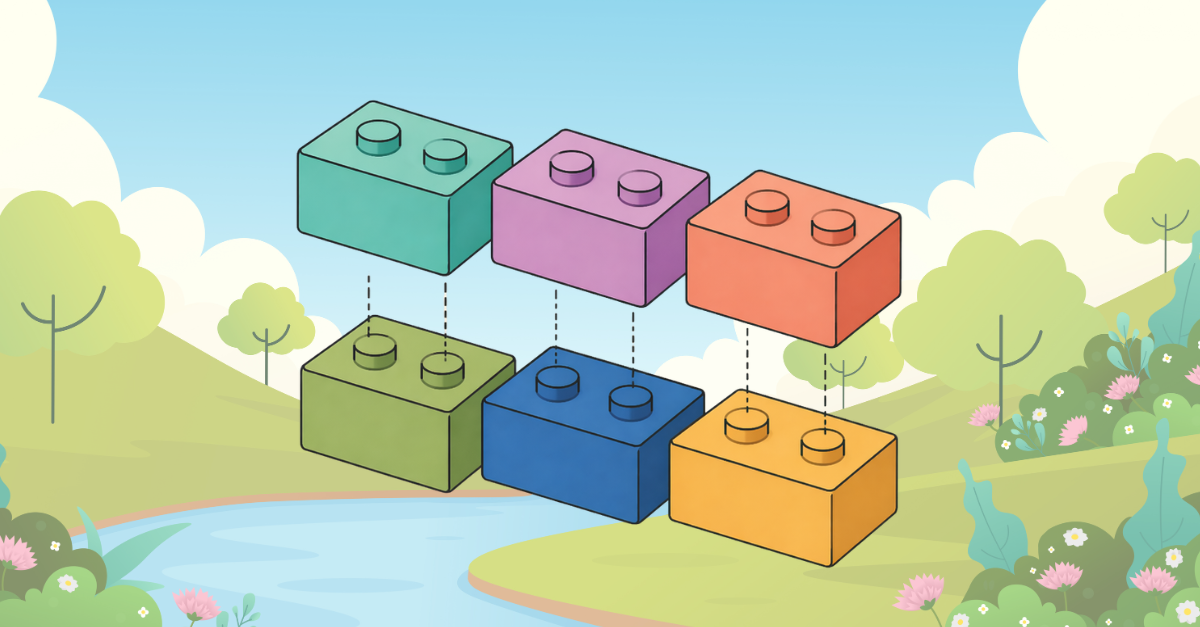
At the core of this transformation is Salesforce Headless 360, a highly composable system that utilizes Model Context Protocol (MCP) endpoints to function like “Legos” for enterprise developers. Instead of operating in disconnected silos, these systems empower agents to actively reach into diverse data environments and communicate openly. For developers looking to monetize their custom AI innovations, Salesforce also introduced the AgentExchange, supported by a brand-new $50 million investment fund to help Trailblazers build, share, and sell specialized agent skills.
Next-Generation Developer Tools
To empower modern builders, Salesforce showcased an impressive array of groundbreaking tools:

- Agentforce Vibes 2.0: Developers can now seamlessly use the Anthropic and OpenAI SDKs directly within their environments to write, test, and evaluate code agentically. This is the second generation Agentforce Vibes which was originally announced at Dreamforce 2025. Developers are free to choose the AI LLM they prefer when developing on this platform. In a full circle moment, CLI seems to have earned a seat on the center stage.
- Agent Script: This single, versionable flat file ensures AI agents adhere to strict organizational guardrails. This adds a necessary layer of determinism and trust to how complex tasks are routed. I personally thought Salesforce announced this a while ago.
- Agentforce Experience Layer: In a massive leap for UI development, builders can now define a rich interface component just once and seamlessly deploy it across the web, mobile, Slack, Microsoft Teams, and even ChatGPT. This innovation natively pushes the brand experience directly into the user’s natural flow of work. This is an important announcement and signals a big shift in Salesforce development strategy.
6 Key Takeaways from TDX26
The topics highlighted in this announcement paint a clear picture of where Salesforce’s vision is heading. I also observed the absence of some products and platforms during the announcement.
Here are my takes on the implications of this vision, if it can be successfully delivered:
- UI: User interface on Salesforce is deprioritized. In the following years, we should expect the tools and products that customize the Salesforce UI to gradually lose their importance. Will we spend hours after hours to refine dynamic page layouts? Probably not.
- Channels: The new focus is to meet the users where they already are. If they are on Slack, developers will find a way to visualize the data on Slack. If they are on Teams, the users will see the data there.
- Integrations: Every tool either becomes an MCP (or API) provider or client or both. AI will help developers connect these tools.
- Salesforce Code/Low-Code: I counted the times Apex or Flow were mentioned in the keynote. Each appeared only once or twice. Instead, the main focus was enabling development using AI and mainstream coding platforms (React got its moment on the center stage). Please read my additional comments in the conclusion section.
- Data: Data 360 remains in the center stage both as a tool and functionality. Salesforce positions its value as the provider and processor of meaningful data.
- Hybrid Agents: Salesforce still highlights Agent Script as a deterministic way of processing transactions pointing to challenges in Agent accuracy. Salesforce recommends hybrid approaches between deterministic and probabilistic agents.
Prefer to learn by watching? Here is the exact same information in this post, but in video form. ⬇️
Additional Features and Functionalities
Here is a list of the remaining new features and functionalities announced at the TDX 2026 keynote:
- Agent Exchange & $50M Fund: A new marketplace ecosystem allowing developers to build, share, and monetize specialized agent skills and sub-agents, supported by a newly announced $50 million investment fund.
- Agentforce Labs & “Getting Started”: A new environment for testing cutting-edge AI innovations before they are generally available. The “Getting Started” feature lets developers provision an org, set up Agent Script, and deploy an agent in seconds using a single terminal command.
- Agent Builder: A low-code canvas view designed for business users to build and collaborate on agents using natural language. The latest evolution of the tool that has been around for years.
- Testing Center & A/B Testing API: A dedicated testing experience with custom scores, evaluators, and automated smoke testing to simulate real user scenarios and ensure agents follow guardrails. Salesforce also announced a new A/B Testing API to help continuously improve agent performance.
- Observability Tools (SCDM API & Slackbot Telemetry): A new OpenTelemetry (OTEL) compatible SCDM API provides deep visibility into agents in production. Slackbot natively integrates telemetry. This allows admins to paste a session trace ID and instantly analyze and improve agent interactions within their flow of work.
- Multi-Agent Orchestration (Agent Fabric): Now generally available, this capability uses Mulesoft Fabric (or Agent Fabric) to connect multiple agents within an org, enabling them to collaborate and pass off tasks -such as a service agent flagging an opportunity for a sales agent.
- Agentforce Voice, Mobile SDK, and Enhanced Chat v2: Expanding how users interact with agents, Salesforce launched Agentforce Voice (now actively powering their 1-800-NO-SOFTWARE help line), Enhanced Chat v2 for rich web interfaces, and the Agentforce Mobile SDK for embedding native agent UIs into mobile apps.
Please also note that, with this event, Agent topics have been renamed to subagents.
Conclusion
Ultimately, TDX 2026 highlighted a big shift in Salesforce development strategy. It was one of the boldest events I have seen in terms of setting a new direction for Salesforce’s development vision.
Whether Salesforce can execute effectively against this vision remains to be seen. Regulated industries impose real limits on where Agentforce can be deployed. The shift from user-based to MCP/API consumption-based licensing adds another layer of complexity. The skills gap in the ecosystem remains a challenge as well.
However, if Salesforce is successful, this shift would mean a very different way of working for most of us.
As I mentioned above, Flow and Apex were mentioned only once or twice in the keynote. When the Apex topic came up, the presenter said developers won’t be writing Apex by hand. The Engine demo included Agentforce Vibes writing a React UI. This new rhetoric challenges the importance of Salesforce proprietary code/low-code development platforms. In the next five to ten years, we should see folks questioning the future of Omnistudio, which is essentially a LWC editor, screen flows and even Apex.
It is important to note that we still need experienced and skilled professionals who can test and improve the outputs of these AI-powered development tools. I highly recommend that developers adopt AI-assisted development, and admins adopt higher development skills mastering flows and code to prepare for this future.
Explore related content:
No Browser or UI Required: Salesforce Headless 360 Explained
Top 7 Key Takeaways from Salesforce Dreamforce 2025
Our Must-See TDX 2026 Session Guide
Salesforce Connections 2026: The Future of Marketing is Agentic

