Dreamforce 2026: One Message You Missed Is The Real Game Changer
What Salesforce's biggest keynote in years means for your org

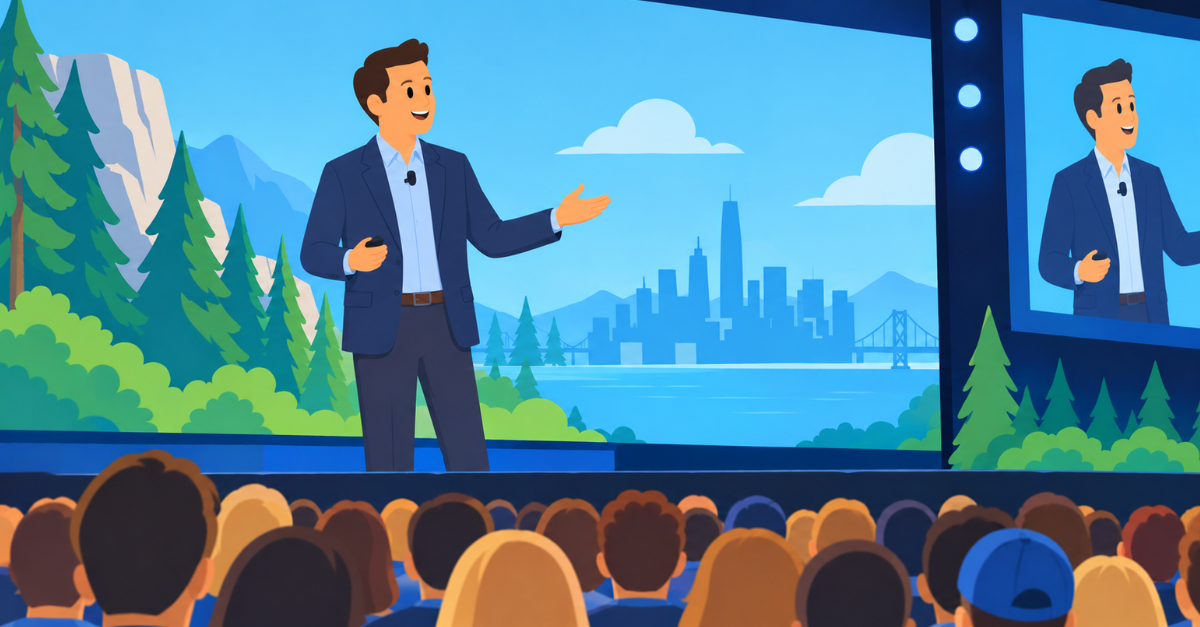
Marc Benioff opened Dreamforce 2026 on September 15 in front of a packed keynote hall. Salesforce counted 53,000 total attendees at Moscone Center this year, with 10,000 people in the room and 10 million more watching live on Salesforce+.
The opening keynote alone covered more ground than most conferences manage in a full day. Benioff unveiled AIforce, a new interface layer built on Claude Cowork, Slack, and Lightning. Rohan Kumar introduced Koa, Salesforce’s first purpose-built CRM reasoning model. A lineup of named agents took the stage alongside live demos from Siemens and Adecco, and Dario Amodei and Jensen Huang joined for a wide-ranging conversation on AI safety and pacing. Here’s what admins and practitioners need to know, including what’s actually live today versus what’s still on the roadmap.
Most Striking Message of the Keynote
For me the most important message of the Keynote is the NVIDIA partnership. You may be wondering why.
NVIDIA partnership gives a loud and clear message on where Salesforce is heading:
- Salesforce finally saw that it can’t and it won’t be an AI LLM developer. Do you remember the Atlas reasoning engine of the first days of Agentforce? It all sounded like a technology being developed in-house. It was arguably going to be the moat for Salesforce in the AI world. Salesforce initially announced that you can use the LLM of your choice for reasoning, then decided it will develop a model with NVIDIA partnership.
- Salesforce is leaning into the open source model for AI. NVIDIA is a big proponent of open source for AI LLM. Salesforce will use NVIDIA Nemotron open model family for the reasoning engine.
- Salesforce found a way to control the costs for AI LLM: An open source model that Salesforce will run, developed fit for purpose, is expected to be less costly than the alternatives. This is the reason why Salesforce can offer an unlimited tier for AI usage now. Despite the high price tag, this is still great news for some organizations.
- Salesforce realized that it is not realistic to try and force clients to stay in the Salesforce ecosystem. This is the reason why all the partnerships with other AI LLM vendors – like Claudeforce – are being announced. I expect others like ChatGPTforce to follow. Removal of the Agentforce branding from all the clouds and product is not a coincidence. “Your Agentforce Sales Cloud is now easily accessible on Anthropic via Claudeforce” does not make sense in this new world.
Let’s go into the details of the keynote messages.
AIforce: A New Interface Layer
Benioff framed AIforce as the next chapter in a run of interface shifts Salesforce has lived through: command line to GUI, GUI to web, web to mobile, and now to AI. AIforce sits on top of Agentforce, Data 360, and Customer 360, and it pulls from Salesforce’s metadata layer to assemble dynamic, context-aware workspaces instead of static screens. The decline of the GUI importance is not a new message, it was brought up by Salesforce before. But here is the new twist that was communicated at Dreamforce…

The core argument: no single AI model can run an enterprise by itself. Models are probabilistic. They’re not grounded in a company’s single source of truth. Salesforce’s pitch is that AIforce bridges that gap by combining four layers: a data layer (Data 360), an applications and semantics layer (headless business logic), an agentic layer (Agentforce), and now a live interface layer (AIforce itself).
AIforce ships in a few flavors depending on where your team already works:
- Claudeforce runs AIforce inside Claude Cowork, built with Anthropic.
- Slackforce runs it inside Slack.
- Agentforce Coworker runs it inside Lightning.
- An SDK is available for teams that want to build custom AIforce interfaces.
- AIforce Max Edition bundles all of it into a single SKU.
Salesforce says zero data retention is built into every version. Customer data doesn’t get used to train the underlying models.
The Claudeforce Demo: A Live Command Center
President of Applications and Marketing Patrick Stokes demoed Claudeforce live, built entirely by asking Claude to construct a personalized command center. It opened with an AI-generated avatar of co-founder Parker Harris delivering deal signals: the quarter was running short of target with weeks left to close, and a mid-six-figure opportunity had stalled in a security review.
Stokes clicked into the account, confirmed the blocked deal, and triggered a Slack message to his team directly from the interface, all without leaving Claude or touching traditional Salesforce screens. He built the whole UI through natural-language back-and-forth with Claude, describing it as roughly six to eight minutes to get a working version up, with a few more days of iteration for the extras.
We have seen this wizardry before. Does this demo relate to real life use cases well. I don’t think so.
What’s Actually Behind the Claudeforce Name
Claudeforce is broader partnership Salesforce and Anthropic announced on August 26. At Dreamforce, it’s also this specific interface running inside Claude Cowork. The plugin doing the technical work underneath is called Salesforce in Claude. It handles MCP server configuration and zero data retention settings. Those would otherwise take real engineering time to stand up. Anthropic moved Salesforce in Claude into open beta on September 15. That’s the same day as this keynote. So it’s newly available, not a future promise. There is a form that the clients can fill out to start playing with Claudeforce.
Koa: Salesforce’s First CRM Reasoning Model
Rohan Kumar is Salesforce’s new President of Engineering and Platform. He introduced Koa, Salesforce’s first purpose-built CRM reasoning model. Koa supports long-running agents working through multi-step outcomes. Think of a sales agent reasoning through the next best action. Or a service agent routing a complicated case.
Salesforce built Koa by extending Nvidia’s Nemotron model. It trained the model on synthetic data only. The company says no customer data went into training it. Kumar framed it as a response to customer feedback. Customers want to choose the model that fits their needs. They want price and performance options for each task.
AI Safety on the Main Stage
Benioff brought Anthropic CEO Dario Amodei on stage. The conversation moved quickly from product to AI safety. Amodei laid out a three-step approach. First, look hard at your own safety practices. Then work with the industry to raise standards. Finally, build toward international governance. He noted: Even if AI capability froze today, most enterprises have captured only 5 to 10 percent of its value. It is important to mention here that his latest call on pacing frontier models due to security concerns is a highly contested position.
Jensen Huang joined for a walk-and-talk across the stage. He described AI as a new industrial revolution. He compared data centers to “AI factories.” They turn electricity and enterprise data into intelligence. He pointed to open-weight models growing fast. They went from 30 percent to 70 percent of the market in a year. Closed-model token volume grew 25x in that same window. Huang’s take on safety was different. He treats it as an engineering problem each company owns. He doesn’t think the whole industry needs to slow down. Considering that he sells the equipment for these models to run on, his position is not a surprising one.
Agentforce: The Named Agents Announced at Dreamforce
Salesforce leaned hard into a lineup of purpose-built agents sitting on top of Agentforce: Hunter, Piper, Casey, Page, Marshall, Finn and Ada. Read more about these agents here.
Siemens’ Katie O’Neil led the Piper and Marshall demos. Adecco CEO Denis Machuel joined to talk through Ada’s rollout: Adecco reports 35 to 40 percent of recruiter time saved and 20,000 additional candidate placements year-to-date.
Governing the Agentic Enterprise at Dreamforce
Rohan Kumar closed the keynote with the governance side, framed as five layers working together:
- Informatica Data Prep cleans and curates data sitting in silos, warehouses, and legacy systems.
- Data 360 builds trusted enterprise context using zero-copy data federation, without physically moving data.
- Tableau defines shared business semantics, so metrics like ARR and churn mean the same thing across every agent.
- Salesforce Guardian, an evolution of Shield and Trusted Services, focuses on agent identity (catching agents that go off-policy) and data classification and lifecycle protection.
- MuleSoft Agent Fabric gives IT a single registry to monitor agents across providers, including Agentforce, Azure, AWS, and Google. Agent Fabric Wallets let admins budget spend per agent and apply AI-recommended cost optimizations.
Kumar demoed both Agent Fabric and Guardian live using Adecco’s Ada deployment, showing an admin view of agent skills, data lineage back to the Informatica catalog, latency and error-rate monitoring, and budget tracking through Agent Fabric Wallets.
Salesforce Dreamforce 2026: What to Prioritize After the Keynote
Salesforce packed an unusual amount into one keynote, and not every announcement needs your attention on day one. Koa is worth watching if your team already leans on Agentforce for sales or support work and you’re curious about a lower-cost, CRM-specific alternative to a general-purpose model.
Claudeforce and Salesforce in Claude matter most if your org already lives inside Claude Cowork day to day. And if you’re an admin managing more than a handful of agents, Agent Fabric and Guardian are the two names to bookmark, since cost control and rogue-agent detection are going to become real operational problems as agent fleets grow.
The availability and pricing of these products are not entirely clear to me. The details will be clearer in the coming days.
What’s Actually Live Right Now
Koa’s rollout timeline and AIforce pricing weren’t detailed on stage, and neither is generally available yet. Salesforce in Claude is further along: it moved into open beta on September 15, so it’s live now, just newly so and still rough around the edges.
The silver lining of the keynote is hopefully this message: Benioff and Nvidia’s Jensen Huang used part of the keynote to push back on “SaaS-pocalypse” predictions. Benioff’s framing: this isn’t the end of software, it’s the end of software that makes humans do all the work. Jensen Huang denied the predictions of decrease in human workforce capacity.
What do you think? Too good to be true. Probably.
Watch the keynote for yourself here:
Explore related content:
Salesforce Launches New Fellowship for Veterans Entering Tech


@gatortail I'd want to see the first admin workflow that uses Koa in production, with the exact Salesforce objects it can read and change.
Remote Reply
Original Comment URL
Your Profile
Why do I need to enter my profile?
This site is part of the ⁂ open social web, a network of interconnected social platforms (like Mastodon, Pixelfed, Friendica, and others). Unlike centralized social media, your account lives on a platform of your choice, and you can interact with people across different platforms.
By entering your profile, we can send you to your account where you can complete this action.