
Standard or Custom Object – The Importance of the Data Model

dDesigning the data model is a critical step in any Salesforce implementation project, as it forms the foundation for how information is structured, accessed, and managed within the system. A well-designed data model ensures that key business processes are effectively supported by aligning data structures with organizational needs. It defines the relationships between objects, fields, and records, which directly impacts system performance, scalability, and usability. Poor data modeling can lead to inefficiencies, data integrity issues, and challenges in reporting and automation. By thoughtfully designing the data model upfront—considering factors like object relationships, data security, and future growth—organizations can create a robust, flexible framework that supports accurate reporting, seamless integrations, and efficient workflows, ultimately driving the success of the implementation project.

Standard or Custom Objects
One of the important decisions in this process is whether you will leverage the standard data model for your needs, or create custom objects. Most people know about the foundational standard objects of Salesforce: Lead, Account, Contact, Opportunity and Case. Most Orgs have access to these objects.
License Type
However, not all Orgs have the popular Sales Cloud license. They could have Service Cloud, or others, with additional specialized licenses added on top, such as Field Service and CPQ. Therefore, knowing which objects your license type comes with is an important step in data model preparation.
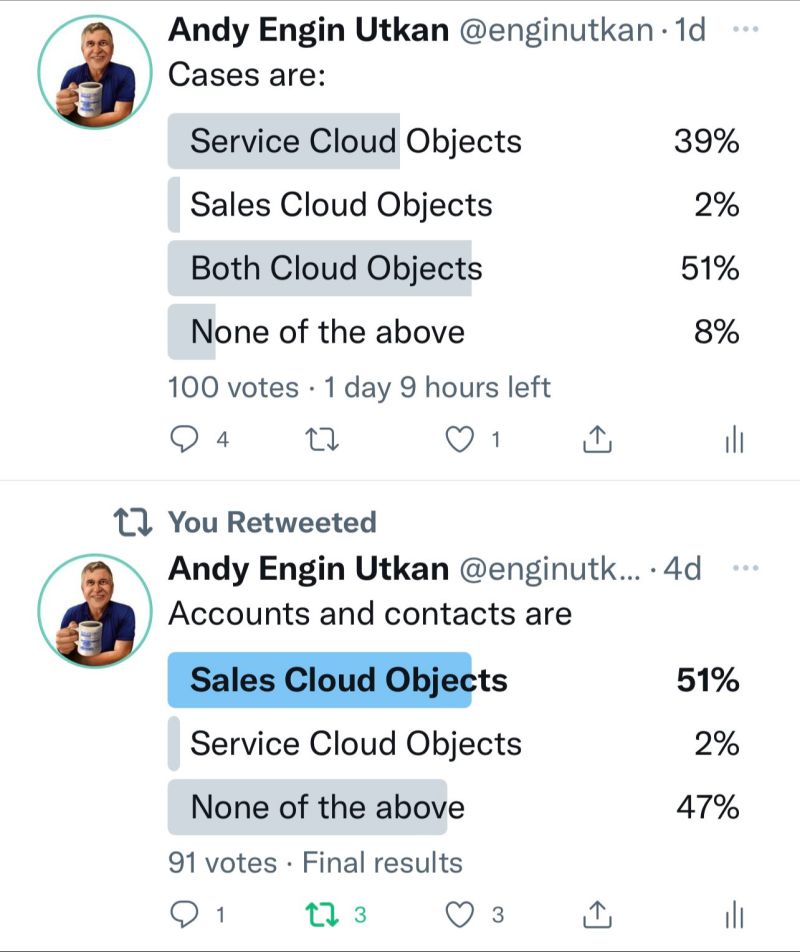
I posted a few polls on Twitter (X) asking about standard objects: What cloud license does each standard object come with? Many participants did not know the correct answer. I saw that only about half of the respondents got the answer correct.
Sales Cloud vs Service Cloud
As a response to these posts Emily McCowan, a Technical Architect, posted this writeup and clarified some of the confusion around Sales and Service cloud objects. Please read it, it is very good.
You may know the data model very well. You will also need to know what standard objects come with your license to decide whether to use them when the need arises.

Explore related content:
How to Use Custom Metadata Types in Flow
How To Use Custom Permissions In Salesforce Flow


3 Comments