
Claudeforce Explained: Salesforce and Anthropic’s New AI-CRM Partnership


Salesforce and Anthropic announced Claudeforce on August 26, 2026, during Salesforce’s Q2 FY27 earnings call. Claudeforce brings Claude’s reasoning together with Salesforce’s data, workflows, business logic, and governance, and makes it strategically accessible from inside Claude itself.

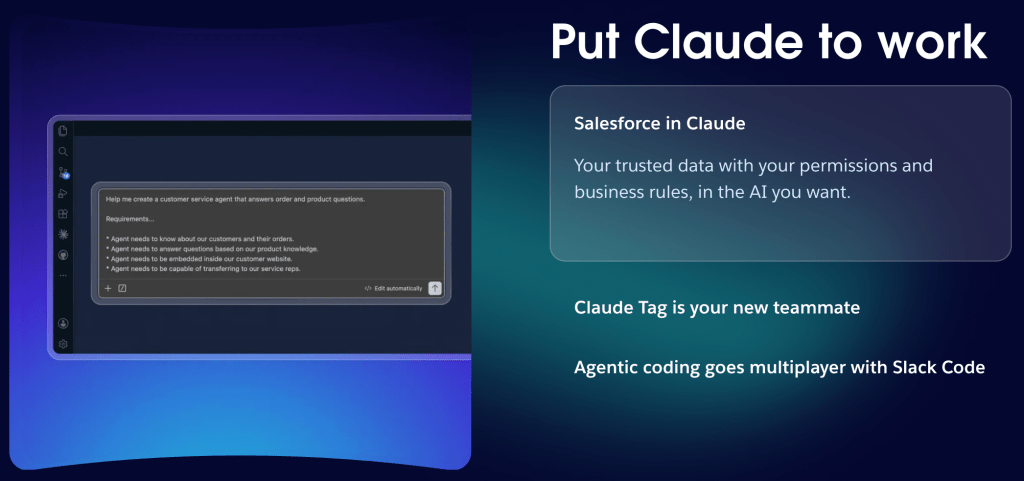
Many people lean on AI and LLMs to get through their workday. Sellers are turning to Claude for research, drafting, and quick answers, for example. Salesforce saw an opportunity and decided to meet the users there instead of asking them to come back to Salesforce. Partnering with Anthropic let Salesforce bring its data and rules into a tool people already use every day, rather than building another interface for sellers to learn.
Claudeforce launches with 37 skills built for Sales specifically, and only works within a user’s existing Salesforce permissions, so access depends on being both a Salesforce user and someone with sales-team access today.
What Salesforce in Claude Actually Does
Traditional software puts the burden on the seller. Open the account. Click into the history. Piece together the story before you can act. Salesforce in Claude makes it easier. Sellers can ask Claude about a deal, a pipeline, or an account, and Claude reasons across Salesforce, Slack, and email to answer and act, without the seller navigating between screens.
The 37 sales skills cover the seller workflow end to end: meeting prep, deal health checks, pipeline reviews, and more. Salesforce and Anthropic built these skills specifically for Claude’s reasoning and generative UI. They are not generic prompts wrapped around an API call.
According to Salesforce, one use case could be an onboarding flow that reads a seller’s Salesforce, Slack, and connected data to build a tailored dashboard automatically, generated live inside Claude.

The Underlying Infrastructure: Headless 360 and MCP
Salesforce in Claude runs on AIforce, Salesforce’s trusted enterprise harness. AIforce brings business data and workflows to any agent through MCP servers, APIs, and CLI tools. It builds on the Headless 360 architecture Salesforce introduced at TDX 2026, exposing data, workflows, agents, and governance through MCP. No custom integration work required.
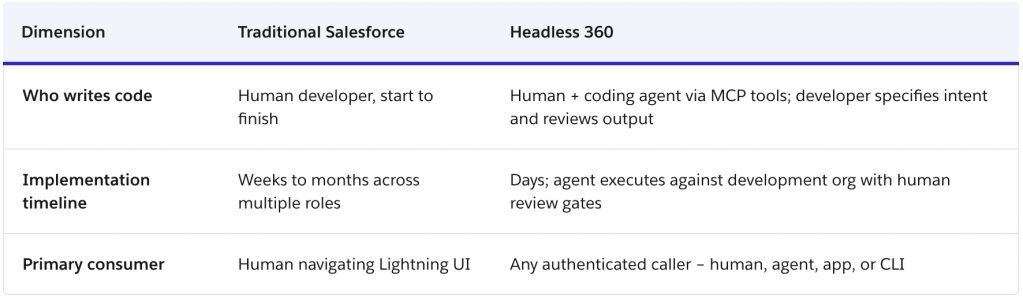
The mechanism is the same one we’ve written about since TDX: MCP turns Salesforce capabilities that used to require logging in and clicking through screens into something an agent can reach directly, wherever the seller is working.
Governance in Salesforce Gets Reused
This is the part admins will care about most: Salesforce in Claude runs through your existing Salesforce permissions and business rules. Claude sees only what a given user is authorized to see, and can only do what that user is authorized to do.
There’s no new permissions model to stand up and no per-user configuration. An admin connects Salesforce in Claude once, and it works for the whole team from day one.
Write actions come with configurable controls. You decide whether Claude checks with you before sending an external email, or sends it once you trust the workflow. When Claude updates a record, it changes only the field it said it would change.
Salesforce and Anthropic say they’re continuing to build additional enterprise controls together, including data residency and access controls, plus automated review meant to catch problems before they reach customers.
Should Salesforce Admins Care About Claudeforce?
Salesforce in Claude is live today for select pilot customers. Salesforce and Anthropic plan an open beta starting in September 2026. The initial release focuses on Sales skills, with plans to expand into other teams in the months following. If you’re a Salesforce admin, the governance model is the detail to watch. Claudeforce doesn’t ask you to build a second permissions layer or trust a black box. It routes everything through the rules you already enforce.
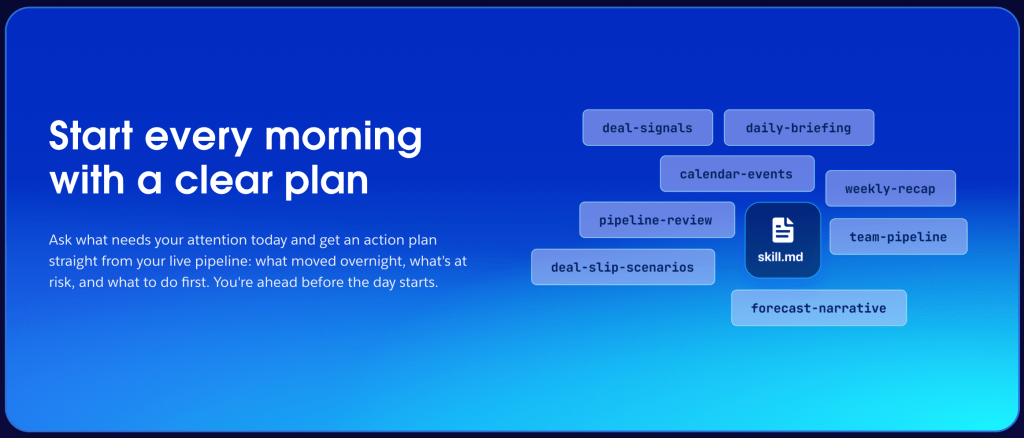
If you’re a seller, the pitch is fewer clicks and less manual digging. Whether that holds up in daily use is the question worth asking as the open beta rolls out in September.
We’ll track Claudeforce through pilot feedback and the open beta launch, and follow up with hands-on coverage once broader access opens.
What do you think, admins, does Caludeforce news fill you with excitement or anxiety?
Explore related content:
Why Headless Architecture Is the Foundation Salesforce Teams Need

